About the survey
The Development Effectiveness Expert Survey (DEES) is an instrument for bringing expert positions on development effectiveness and the post-2030 agenda into the open, so they can inform the policy debate.
The survey is intended to run biennially. Repeating it will track how experts’ views evolve over time, while each round also asks topical questions that can feed directly into active dialogues and processes.
The inaugural 2026 round invited experts identified through a systematic screen of the development effectiveness literature to say what effectiveness means to them, what stands in its way, whether the multilateral system can deliver, and where the post-2030 agenda should focus. The results are published as Policy Brief #1, Listening to the Experts.
Download Policy Brief #1 (November 2026)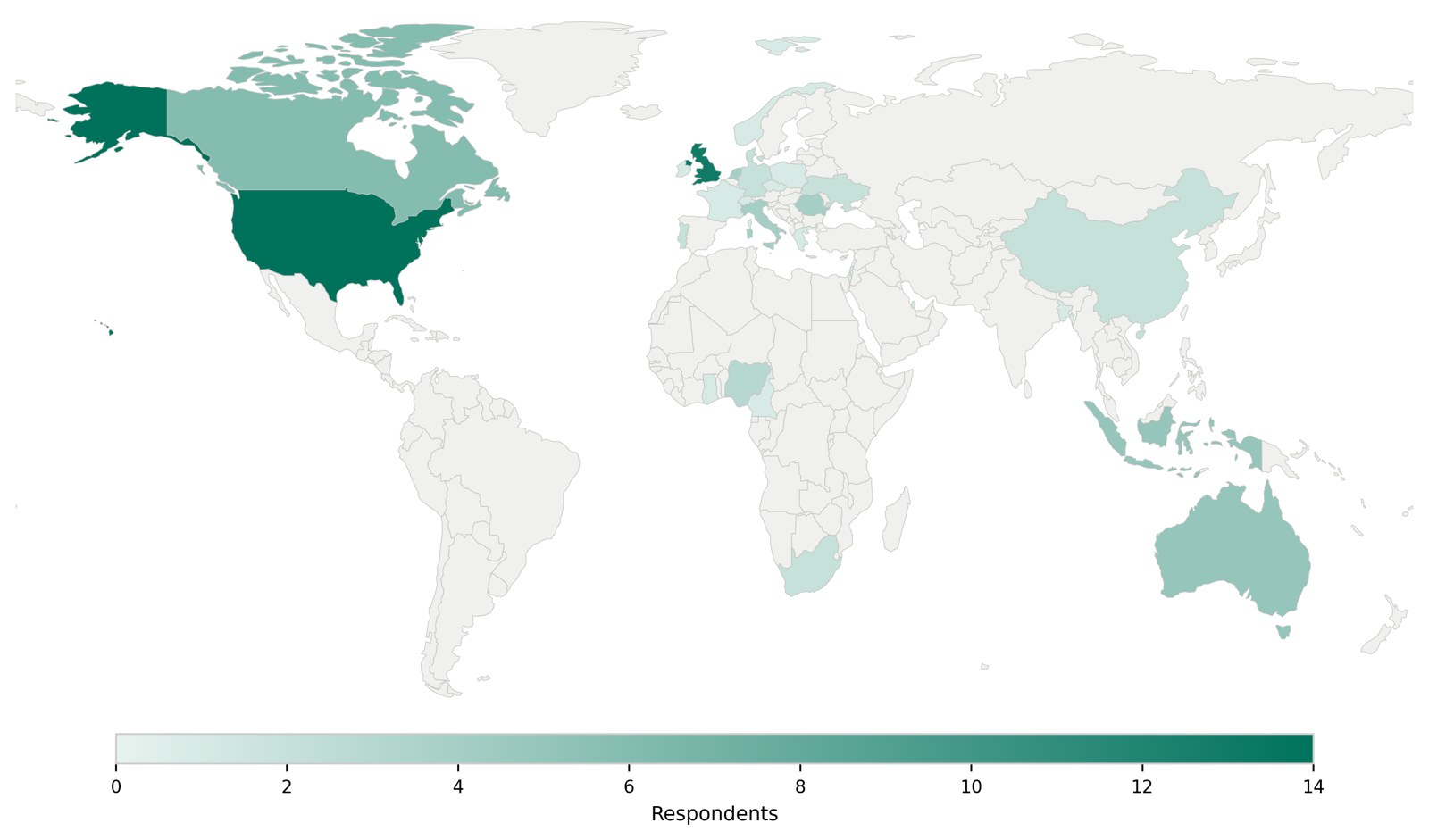
DEES 2026 respondents by country
Survey engagement
Of 1,699 invitations, 868 were opened and 157 clicked through. Ninety experts responded: 53 completed the survey and 37 answered in part. Ten recipients opted out.
Respondents came most often from economics (40), development studies (29) and political science / international relations (25). The most common areas of expertise were development co-operation and foreign aid (40), political economy of development (35), and development effectiveness and the GPEDC principles (28).
What experts said
Can the multilateral system deliver?
Of 58 respondents, 47% disagreed that it can, 16% were neutral and 38% agreed (mean 3.8 on a 7-point scale).
What does “effective” development mean?
Share of the 62 respondents answering who chose each association (multiple selection):
Five key messages
- Ownership must be real.Locally led priorities, not box-ticking consent.
- Barriers sit on the provider side.Donor-driven priorities, fragmentation and short-termism.
- The multilateral system is under stress.Funding cuts, fractured trust and stalled reform.
- Post-2030: fewer, sharper goals.Climate at the core, with AI governance rising.
- Academia as knowledge partner.Co-produced, translated, timely and independent.
On mutual benefit, experts did not reject the idea but scrutinised it: is it genuinely horizontal, or provider self-interest under another name? That question is the subject of 2030 Pact Dialogue #3.